
New NATO commercial space strategy seeks to prompt more investment
The new strategy strongly echoes the US Space Force's Commercial Space Strategy published in April 2024, and copies some of the implementation tools the service has put into place.
The new strategy strongly echoes the US Space Force's Commercial Space Strategy published in April 2024, and copies some of the implementation tools the service has put into place.

Chief of Space Operations Gen. Chance Saltzman stressed that the commercial imagery the Space Force gathers will not be used directly for targeting, rather to allow commanders to rapidly understand evolving situations.


Consolidate network monitoring, performance management, and fault isolation into a single, comprehensive solution.

"[I]ncreased situational awareness in the space domain is absolutely essential for NATO allies," Maj. Gen. Paul Lynch, deputy assistant secretary general for intelligence on NATO's military staff, said today.

During a HASC strategic forces subcommittee meeting Wednesday, Ranking Member Rep. Seth Moulton, D-Mass., expressed concern that OMB has "slashed" NRO's budget for acquiring commercial imagery.

"COCOMs reported after these tests that J-REN and SlimGIMS not only met the capability gap, but also reduced the time to create a collection request from an hour to 5 minutes," an NGA spokesperson told Breaking Defense.

NGA Director Vice Adm. Frank Whitworth confirmed that the agency and the Space Force are working on a memorandum of agreement that will set "procedures" to ensure that they don't duplicate commercial imagery products.


Blending superior optics, advanced stabilization and AI-powered autonomy in a compact and rugged system, ASELFLIR 600 delivers unmatched intelligence, surveillance and reconnaissance (ISR) capabilities.

However, several industry sources said that their companies have not been blocked by NRO from taking pictures over Ukraine.

License holders are receiving emails saying that all correspondence with the Commercial Remote Sensing for Regulatory Affairs is now being routed to the NOAA Office of General Counsel as no "senior personnel remain in the office," according to communications reviewed by Breaking Defense.
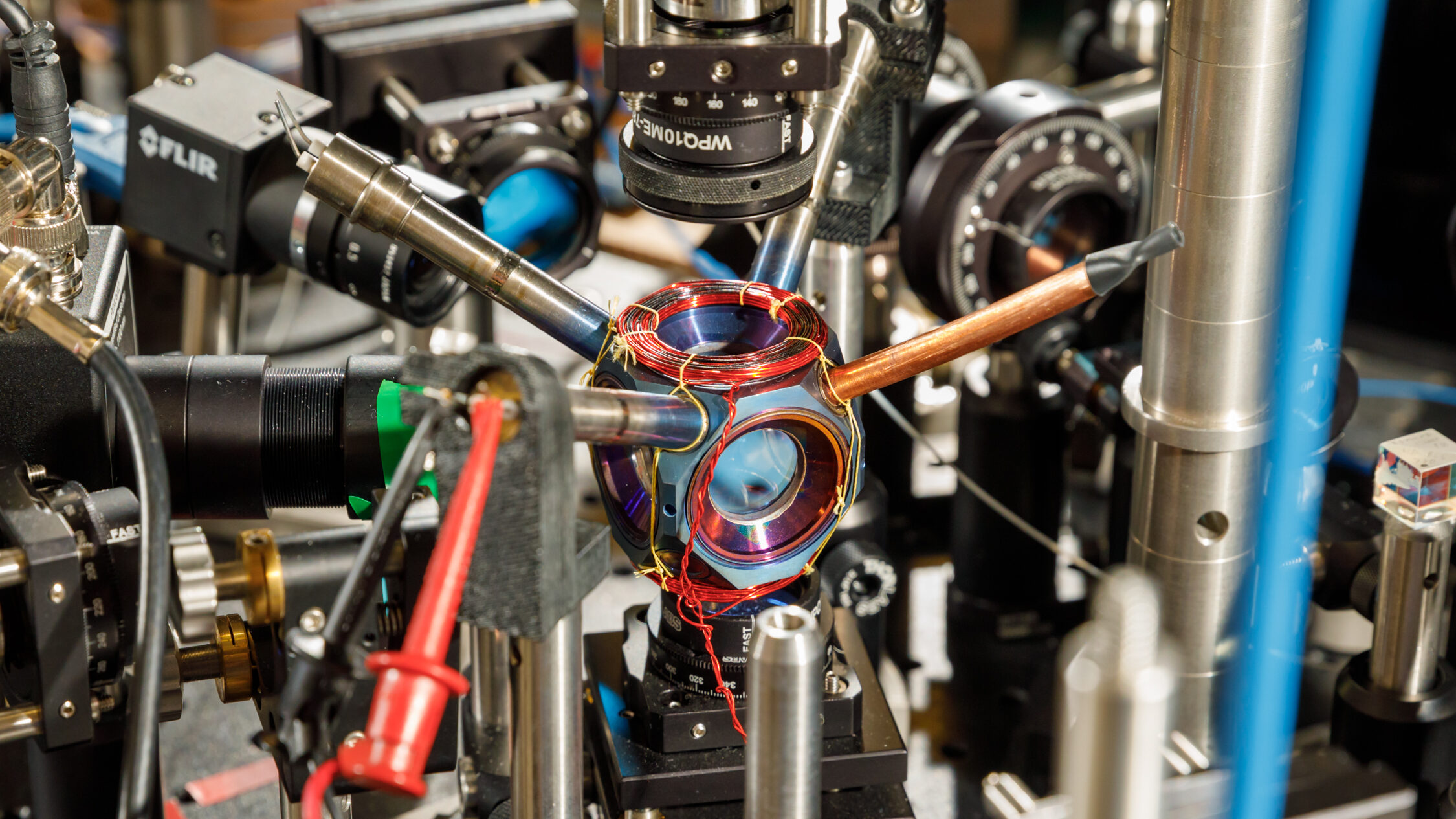
Quantum tech could provide high-precision alternatives to GPS for targeting or sonar for hunting submarines. But the same hyper-sensitivity that makes them such good sensors also makes them fatally vulnerable to interference — so far. A new DARPA program aims to change that.

In an attempt to spur the Space Force to cough up more people, the House and Senate Intelligence committees have mandated quarterly reports by the Director of National Intelligence on whether DoD is meeting its commitment to provide uniformed personnel to NRO.


This year saw evidence that a shift toward more openness about US national security space activities is coming whether those deep in the "black world" are ready or not.

The report, shared with Breaking Defense, recommends Congress consider funding systems against Chinese "counter-intelligence, surveillance, and reconnaissance (ISR) systems, electronic attack and cyber capabilities, antiradiation ordnance, base hardening, close-in weapons systems, and air defense capabilities."

The five new CIC companies are BlackSky, Kratos, Leolabs, ICEYE and Telesat; Hawkeye 360 and Exoanalytic will join soon, a Space Force spokesperson told Breaking Defense today.

The new effort for microHABs is being led by the Army's Program Executive Office for Aviation, Andrew Evans, director of the Army's ISR Task Force, told Breaking Defense, which for the moment is the primary acquisition shop overseeing the service's pursuit of systems that can operate at the upper edges of the stratosphere — roughly between 60,000 and 100,000 feet, and just below orbital space.